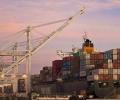
Exports declined for the fourth-consecutive month by 10.3 per cent year-on-year to $34.98 billion in May, while the trade deficit widened to a five-month high of $22.12 billion. According to the data released by the commerce ministry on Thursday, key export sectors recording negative growth include petroleum products, gems and jewellery, engineering goods, ready-made garments of all textiles and chemicals. Imports also declined 6.6 per cent, six-month in a row, to $57.1 billion against $61.13 billion in the same month last year, the data showed.

Oil marketing companies have approached the government to reduce tariffs since they will continue to lose around Rs 210 crore (Rs 2.10 billion) due to a Rs 1.20 per litre under-recovery on diesel.
The petroleum ministry has sought a Rs 10 per litre increase in petrol and Rs 5 a litre hike in diesel prices, along with a cut in customs and excise duties, to offset the impact of surge in crude oil prices that have touched $135 per barrel.
The Oil ministry is set to raise the diesel prices by Rs 10 per litre over the next ten months. Planning Re 1 increase per litre per month for the coming 10 months. This means the wide-gap between diesel and petrol will reduce. Should a car buyer still buy diesel cars or opt for other options?

Capital expenditure (capex) by 54 large central public sector enterprises (CPSEs) and five departmental arms with an annual capex target of Rs 100 crore and above has reached around 42.5 per cent of their annual target of about Rs 7.33 trillion in this financial year so far, a senior official from the Ministry of Finance told Business Standard. "The Centre is pushing the big public undertakings in the infrastructure and refinery sector to achieve 90 per cent of their target by the end of the third quarter," he said. The capex by this group of CPSEs stands at around Rs 3.1 trillion in the April-August period so far.

He further said that the "focus is on horizontal drilling" as rock formation has created challenges for vertical drilling.
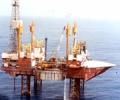
RIL produced a total of 22.04 mmscmd of gas from Dhirubhai-1 and 3 gas fields and MA oil and gas field in the KG-DWN-98/3 or KG-D6 block in Bay of Bengal in the week ended December 30, 2012, the Directorate General of Hydrocarbons said in a production status report to the Oil Ministry.

The government plans to more than double the price of natural gas produced by Oil and Natural Gas Corp (ONGC) to $4.20 per mmBtu, in a move that will help the state-run firm break even in gas business.

In a surprise move, the Ministry had on October 10 moved a note to the Empowered Group of Ministers opposing a hike in price of RIL's KG-D6 gas before April 2014 even though the company itself was not seeking a revision before that date.

In a statement, the state government alleged 'malicious attempts' to discourage the use of products lacking a halal certificate not only seek 'unfair financial benefits' but also form part of a 'pre-planned strategy to sow class hatred, create divisions in society, and weaken the country' by "anti-national elements".

Refusing to be cowed by pressure being brought on him, Oil Minister S Jaipal Reddy on Friday said the decision for mining group Vedanta Resources' $9.6 billion buyout of Cairn India will be taken by the Cabinet without "sacrificing" on national interest.
